Monday, July 8, 2019

El Parque de El Retiro

Esta noche por primera vez fui con una amiga a "El Parque  de Retiro" cual es una de los parques más grandes en Madrid.  También es un jardín histórica.  El parque es más grande que Central Park en Nueva York y es un lugar muy popular para los madrileños y visitantes.  La gente viene al parque para socializarse, relajarse, apreciar la naturaleza, hacer ejercicio y mucha más.  También puedes alquilar un barco para remar en el lago.  Caminamos por más de una hora y media y todavía no anduvimos por todo el parque.  Tuvimos una sorpresa cuando vimos algunos pavos reales en el parque y uno de ellos nos dió un breve espectáctulo.  ¡Qué maravilla!

Tonight I went to Retiro Park for the first time with a friend which is one of the biggest parks in Spain.  It is also a historic garden.  The park is even bigger than Central Park in New York and is a popular hangout for both the locals and visitors.  People come to the park to socialize, relax, to appreciate nature, exercise and much more.  You can even rent a boat to row around the lake.  We walked for more than an hour and a half around the park and still did not walk through the entire park.  We had a surprise when we saw some peacocks in the park and one of them put on a little show for us.  How marvelous!

El centro del parque donde puedes remar (center of the park where you can go rowing)

Hay muchas fuentes (there are many fountains)

Un video con un pavo real (peacock)


El jardín Rosalinda (rose garden)


Toledo


Toledo se llama la Ciudad de las tres culturas porque hace muchos años los judíos, cristianos y muslimanes convivían en armonía.  Cada una de estas culturas dejaron su propia huella en la ciudad.  Es una ciudad bellísima y una de las ciudades más antiguas y únicas en España.  Cuando llegamos a Toledo fuimos primero a la Mezquita del Cristo de la Luz.  Luego vimos la famosa pintura por El Greco "El Entierro de Conde de Orgaz" ubicado en la iglesia de Santo Tome.   También vimos El Monasterio de San Juan de los Reyes una de las obras de la arquitectura gótica.  Por la tarde fuimos a la Sinagoga de Santa María y la Sinagoga del Trásito.   En la Sinagoga del Trásita ocupa el Museo Sefardi donde puedes mirar algunos de los artifactos más importantes de los judíos durante este siglo.

Aprendí que Toledo era bien conocido por la fábricación de espadas.  Ahora puedes comprar una para un recuerdo.  Un dato interesante es algunas que se han hecho en Toledo fueron usados en la película The Lord of the Rings.  También es conocido por la produción de  un tipo de joyería que se llama damasquinado hecho de las técnicas de incrustación de oro y de metales preciosos. Sin Embargo, hoy en día Toledo se convertió en la ciudad que es conocido por el cine.  En resumidas cuentas, me emamoré de esta ciudad y espero regresar un día.

Toledo is called the city of three cultures because many years ago the Jewish people, Christians and Muslims lived in harmony.  Each of these cultures left their own fingerprint on the city.  It is a very beautiful city and one of the oldest and most unique cities in Spain.  When we arrived to Toledo we first went to the Mezquita (mosque) del Cristo de la Luz.  We then saw the famous painting by El Greco "El Entierro de Conde de Orgaz" located in the Santo Tome church.  We also saw the Monastery of San Juan de Los Reyes (Saint John of the Kings) an example of gothic architecture.  In the afternoon we went to the Synagogue of Santa María and the Synagogue del Trásito.  In the Sinagoga del Trásito is housed the Sephardi museum where you can look at some of the most important and special Jewish artifacts during this century.

I learned that Toledo was once well known for the manufacturing of swords.  Now you can buy one for a souvenir.  An interesting fact is that some of the swords made in Toledo were used in the movie  "The Lord of the Rings."  Toledo was and is also known for the production of a kind of jewelry called damasquinado made from inlay/embedding of gold and precious metals.  However, now a days, Toledo has become the city known for cinema.  In a nut shell, I fell in love with this city and hope to return one day.


View of Toledo

An entrance to the city


City Hall

Upper court yard of San Juan de Las Reyes Monastery

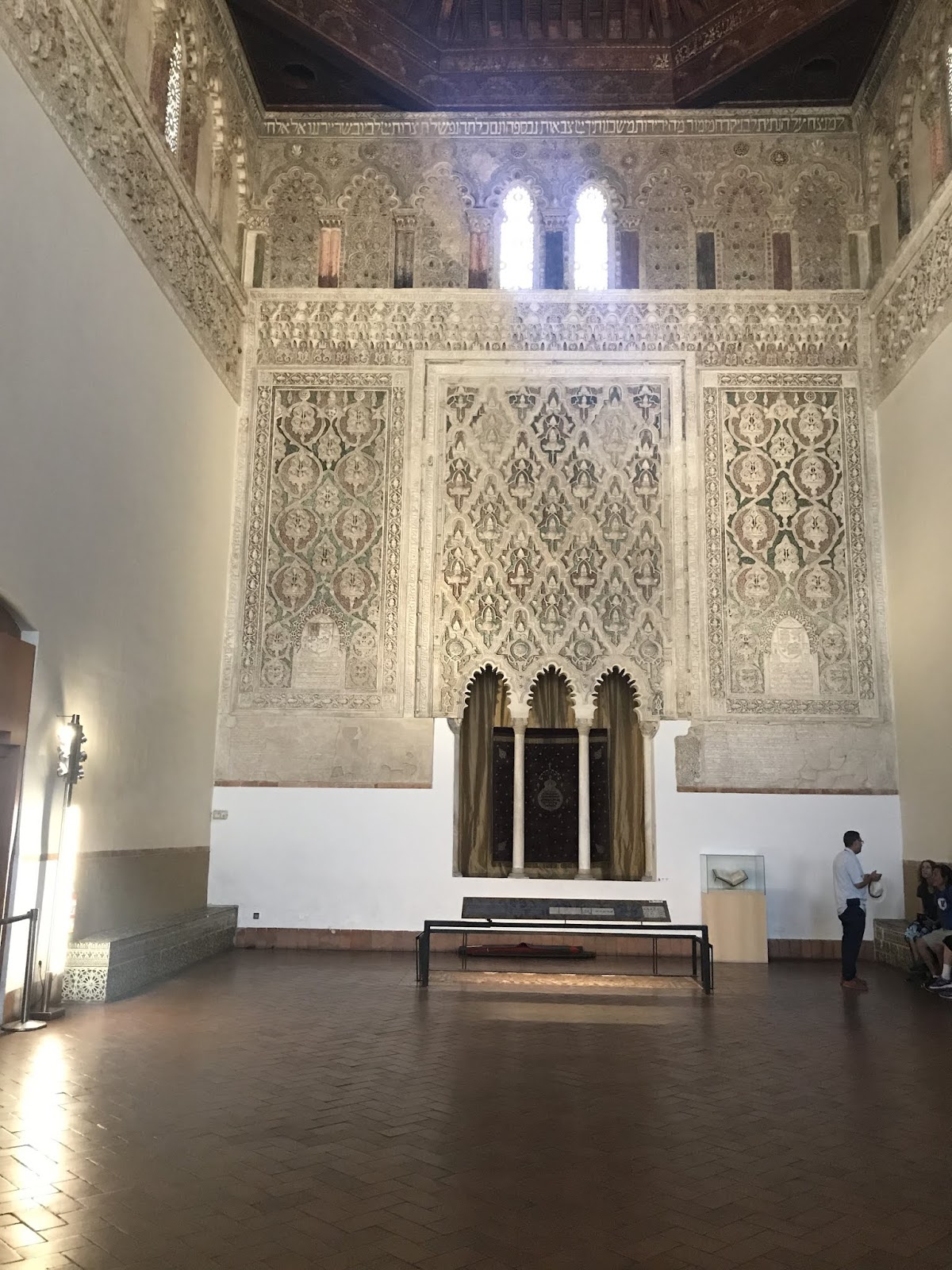
Main part of Synagogue of Santa María 


El Greco's "El Entierro del Conde de Orgaz" inside the church Santo de Tome


Hallway of San Juan de los Reyes

Hand made Damsquinado jewelry

Mezquita Cristo de La Luz

Sinagoga del Trásita 

More arches of Sinagoga del Trásita 

Overlook of the garden in the San Juan de los Reyes Monastery


Sunday, July 7, 2019

La Vida En Madrid Semana 1 (Life in Madrid Week 1)

Mi primera semana en Madrid fue fenomenal y pasó volando.  Tuve que acostumbrarme de jet lag y del horario de los Madrileños.  Una diferencia muy grande es la hora de comer. Normalmente, ellos comen almuerzo a los 2-3 de la tarde y la cena a las 9-10 por la noche.  Es muy común comer “las tapas” entre el almuerzo y la cena porque pasa mucho tiempo durante esas comidas. También, a menudo los bares y restaurantes incluyen tapas gratuitas si compras una bebida.  Me encanta este costumbre que se permite comer mientras socializarse y tuve la oportunidad de ir de tapas con algunos amigos esta semana.

My first week in Madrid was phenomenal and flew by. I had to get accustomed because of the jet leg and also they schedule of the Madrileneans. One big difference is the eating times. Normally they eat lunch at 2-3 in the afternoon and dinner not until 9-10 at night. It's very common to eat "tapas" (snacks/appetizers) between lunch and dinner due to a lot of time passing between these two meals. Also, often bars and restaurants include free tapas if you buy a drink. I love the custom of eating and socializing and I had the opportunity to go out for tapas with some friends this week.

 Una tortilla españala
 Las croquetas con queso


Un menú típica de un bar


Además de estudiar, fui algunas noches por el centro de Madrid con mi amiga Angélica y visitamos El Corte Inglés (un almacén muy famoso), el ayuntamiento de Madrid y La Puerta de Sol cual es una de las más plazas conocidas en Madrid.  Allí vimos unos mariachis cantando y tocando música que fue muy chevere. El miércoles fui al Prado con la Universidad de Complutense para ver las obras de Velázquez, Goya, y El Greco.  La profesora de la universidad hizo un tremendo trabajo con sus explicaciones sobre los artistas. Muestro a mis alumnos algunas de las obras de estos artistas y por fin, he tenido el honor de verlas en persona.


Besides studying, I went out a few nights to the center of Madrid with my friend Angelica and we visited the Corte Inglés ( a famous department store), the city hall of Madrid, and the Puerta del Sol which is one of the most well known squares (like Times square) in Madrid. There we saw a mariachi band singing and playing music that was so cool! On Wednesday, I went to the Prado art museum with the University of Complutense to see the art work of Velázquez, Goya, y El Greco. The teacher from the university did a tremendous job explaining everything about the artists. I show my students some of the art work of these artists and finally, I have had the honor of seeing them in person.


Hay 9 pisos (9 floors!)

Ayuntamiento (city hall) de Madrid

Una banda de Mariachi en El Puerto del Sol
Entrada del Prado (Entrance)

Estatua de Francisco Goya

Hoy (El domingo) visité a una iglesia cristiana con mis amigos Roberto y Angélica llamado El Salem en el sur parte de Madrid.  Tuvimos que tomar el metro por 40 minutos y después caminar más o menos por veinte pero valió la pena.  Me gusto el culto y la gente mucho.  Fue buena idea para regresar a la residencia y luego comer almuerzo y relajarme para que pueda estar lista para la segunda semana de clases.

Today (Sunday) I visited a Christian church with my friends Roberto and Angélica named El Salem "Shalom" in the south part of Madrid.  We had to take the subway for 40 minutes and then walk more or less 20 minutes but it was worth it.  I really liked the service and the people.  It was nice to come back and eat lunch then relax for the rest of the day so I can be ready for week 2 of classes.


Wednesday, July 3, 2019

Las Clases


This Tuesday we started classes.  I will be taking two different classes each week for four weeks, so eight in total.  It is intense but I also like the fact that I can learn about so many different topics that I will be able to use with my students this fall. Since this is an experience for growth in my personal learning I chose to take both literature and teaching method classes.  Each class is two hours long and classes are from 9am-1pm.  Both classes are really interesting.  I will try to summarize each class as I go.    See below for a list of my classes and descriptions for each week

Lista de las clases

Mis compañeros y otros becarios 
Semana 1
LA VIDA EN LA POESÍA Y LA POESÍA EN LA VIDA  (Life in poetry and poetry in life) 

Dr. Santiago gave us an introduction to well know Hispanic poets from many different countries as well as many diverse poems on many different themes.  This class gave me a new perspective and appreciation for poetry especially how poets speak in a "different language" and use figurative, less 
explicit language to convey powerful ideas.  I have already thought of ways that I can implement some poetry next year in my classes to introduce to them some of these special poets like Pablo 


Neruda and Antonio Machado.  For part of our evaluation we had to create our own poem.  This really was a challenge for me as I am a direct person and rarely use metaphors.  Below is my poem.  Yes, it is in Spanish!


Some of the class with Dr. Santiago behind me

EL MITO DE LA MUJER LECTORA (The myth of the woman reader)

Dra. Sanmartín Bastida is my teacher in the afternoon class.  She is so passionate about this topic and even wrote a book on it.  It's about literacy among women in Spain in the 19th century.  It's shocking and sad to realize that it wasn't until then that women were allowed to read and even then with certain restrictions.  It was really interesting to have learned more about and read some stories from some famous female Spanish writers in the 19th century.  She is very organized and does an excellent job with delivering the material not just through fragments of literature but also by showing us pictures and video segments which make the class really engaging. I would definitely recommend this class.


The class with Dra. Sanmartín Bastida (front right)


Semana 2
LA LITERATURA Y EL TEATRO DE LA REPÚBLICA EN LA GUERRA CIVIL
This has definitely been one of my favorite classes.  Dr. Perla-Vega is like an encyclopedia when it comes to the history of Spain. His class is so engaging due to the content and to his dynamic teaching style.   I now have such a better understanding of the actual Spain today because of events that led up to the civil war and during the civil war.  It was really interesting to learn about the movements of educating all of Spain regarding the culture of arts, theater and cinema.  My analysis essay of a play during the Civil War was challenging but I really enjoyed dissecting it and really learned to appreciate the importance of Spanish theater during this detrimental time period of Spain


Mis compañeros con Dr. Perla-Vega

LA LITERATURA DRÁMATICA EN LA ENSEÑANZA DEL ESPAÑOL COMO LENGUA EXTRANJERA


This class started of slow but really ended well.  The focus is on techniques to use literature to teach Spanish as a foreign language.  This class was geared toward Spanish teachers.  We only focused on how to use theater in the classroom but I learned a lot of new skills and ideas to take back with me, especially how to practice grammar skills while acting.  I have not used a lot of theater so this caused me to get out of my comfort zone and I actually enjoyed it.  I read two plays by Frederico García Lorca.  I loved the play La Casa de Bernarda Alba despite it being a tragedy like Romeo and Juliet.  Reading Lorca's works in this class and other classes in Spain persuaded me to see his summer house in Granada this past weekend.

Mis compañera con Dra. Martínez de 
Semana 3
LA ENSEÑANZA DEL ESPAÑOL: LA PRONUNCIACION Y LA ORTOGRAFIA

This is class provides the student with a basic and general overview on phonetics and the common errors that second language learners of Spanish make.  On the first day of class I came in knowing almost nothing about phonetics and syntaxis about any language .  The class started out very theory based touching on sounds waves and vocal chords.  It was very dry at first but after the first few days I really started to learn a lot about the make up of the Spanish language and English as well.  This class has made me rethink about the way I introduce vocabulary to my students to prevent confusion and interference from their first native language English.  

Las alumnas con Dr. Horcajada

VARIEDADES DEL ESPAÑOL : EL ESPAÑOL DE AMÈRICA

This class has been my favorite methods class by far.  Dra. Reguiero is so dynamic and
knowledgeable about this topic.  This class touches on the analysis of the varieties and dialects of Spanish in the Americas and their origin.  We also spend one day discussing all the different dialects in Spain which gave a better understanding to the way Spanish speakers converse in Latin America.  She has also given us several techniques that we can use to teach our students when they learn the Spanish language to avoid confusion with the English language.  The first class more explained the theories but this class actually gave us teaching practices and examples which was really beneficial and helpful.  Since I was traveling to Asturias for the weekend, Dra. Reguiero presented me with the challenge to find some native Asturians and interview them regarding the dialect they speak called "Babel"  Thankfully, I was able to strike up a conversation in a coffee shop and record some of my interview.  It was really neat to learn new words and also hear their dialect that I studied in class!   Unfortunately the video file was too big to post on here.  For all the teachers and future NSE scholarship recipients this class is a must!

Mis amigas Jean y Lauren con Dra. Regueiro
Semana 4


LA GRAMÁTICA DE ELE: UN ENFOQUE NUEVO PARA LA ENSEÑANZA DE LA SINTAXIS
This class touches on many of the difficult concepts that Spanish learners face such as ser/estar, subjunctive vs. present tense and commands.  Dr. Aliaga has so much knowledge on these concepts and does a great job simplifying the uses and concepts that teachers need to focus on when teaching these challenging topics.  He is old school lecture style and talks really fast but I had a chance to really test out my interpreting skills and actually learned a bunch of concepts that I am going to implement this fall into my teaching


LA ANTENCIÓN A LA FORMA DE ADQUISICIÓN  DE LA COMPETENCIA GRAMÁTICA 

Just like Variedades en Español this class is a must for Spanish teachers.  This class compliments the first class I have as it not only covers all the difficult concepts but actually shows us ways to teach the concepts and gives example activities.  Dr. Cano Gineés is so full of knowledge when it comes to helping teachers explain these challenging concepts and does it in a more modern way that is engaging and relevant.  I have learned so much more about the importance of teaching concepts like "Por/Para" and the past tenses in more relevant ways.  Our final evaluation was to create a lesson plan using a "Microrrelato" (Micro-story) that we shared with the other teachers in class.  This was one of the most useful and relevant classes and I'm glad I have some more lesson plans to take back with me to use this fall.


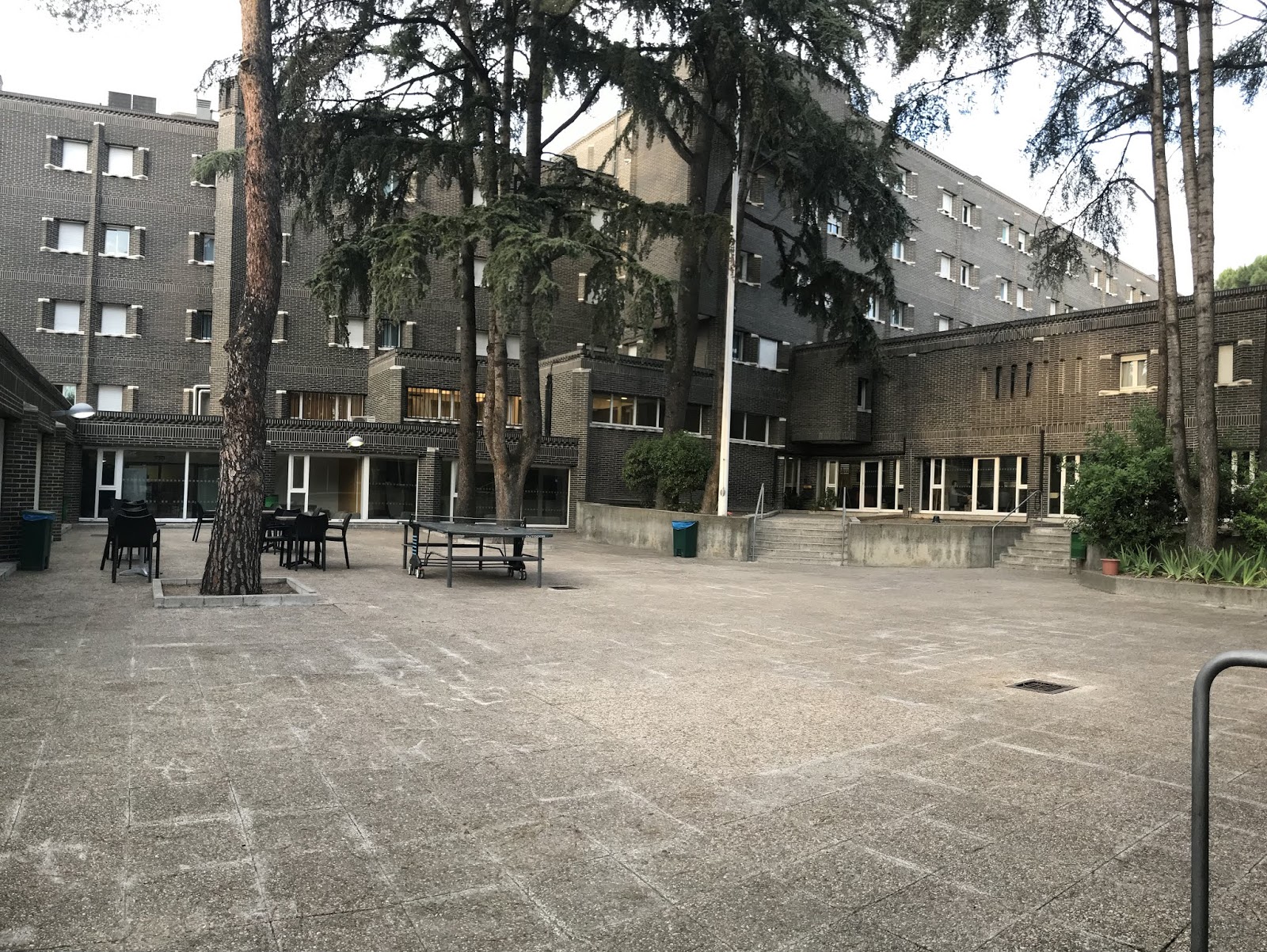
La residencia (Residence hall SEPI)

I have not mentioned the residence hall yet.  The name is Colegio Mayor Fundación SEPI.  It is interesting because "colegio" normally means high school but here in Madrid "colegio" refers actually to a residence hall for a university.  I really like the residence hall.  It is really modern.  The accommodations include a private room with air condition, a bed, desk, closet, bathroom with  shower and WIFI.  Below is a video of my room. 

No he mencionado todavía la residencia.  Se llama El Colegio Mayor Fundación SEPI.  Es interesante porque normalmente "colegio"  significa "high school in Spanish" pero en Madrid se refiere a una residencia de la universidad.  Me gusta mucho la residencia.  Nos proveen con una habitación privada con aire acondicionado una cama,  un escritorio, un baño con un inodoro y una ducha y WIFI.  Hay un breve video debajo para un tour de mi habitación.                                                                


 La Residencia Colegio Mayor Fundación SEPI

El video de mi habitación (video of my room)


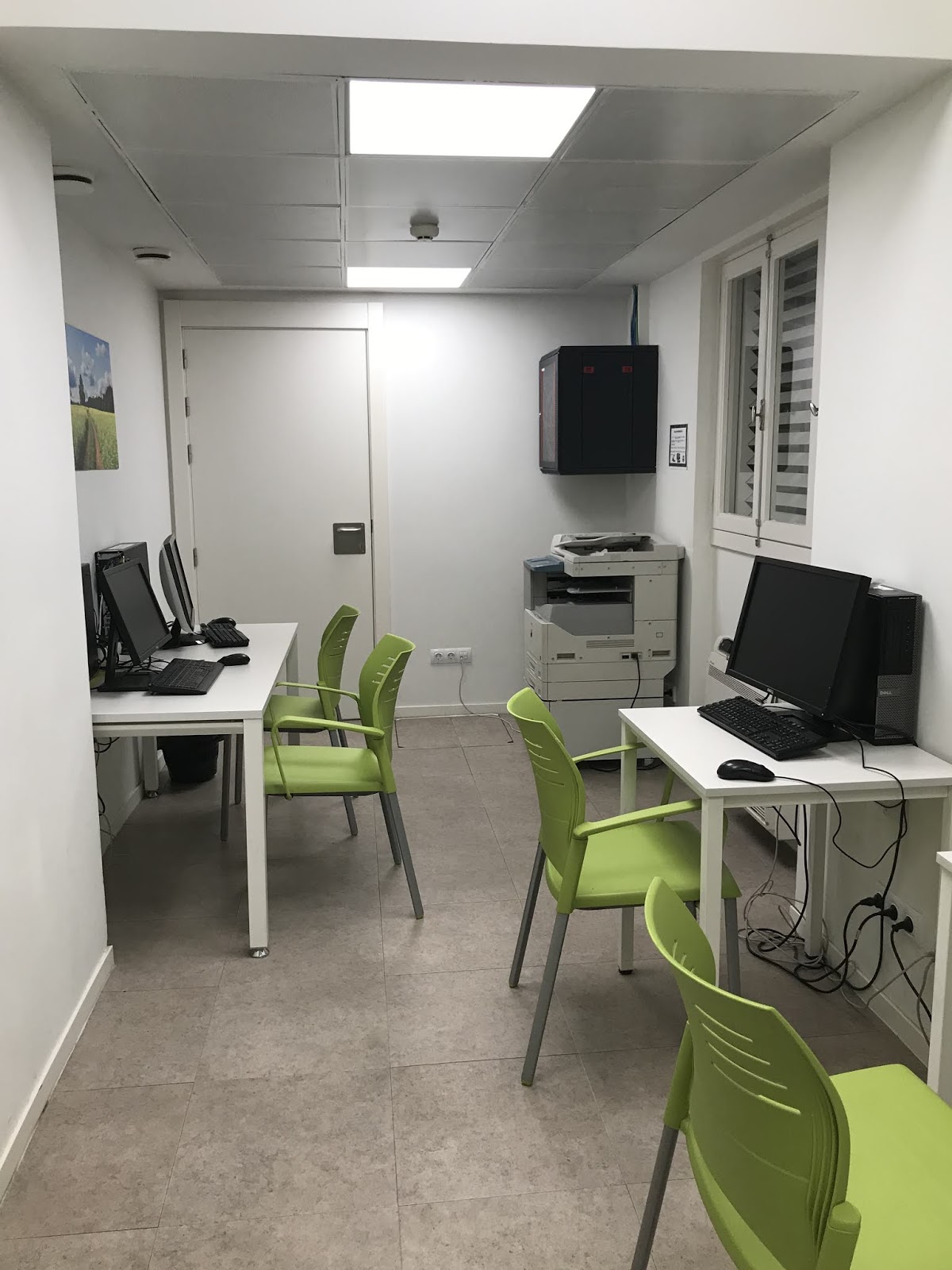
There are many common areas available to the residents including a computer room, reading room, study rooms, game room, snack room, swimming pool and a tennis court.  There is no need for the gym since we have our own “urban gym” in Madrid, ie…. I walk two miles to class and two miles back!  See below for more pictures.

Hay muchos lugares comunes incluso una sala de computadoras, sala de lectura, sala de estudio, sala de merienda, una piscina, y una cancha de tenis.  No necesitas un gimnasio cuando tienes un gimnasio urbano como Madrid 😁  Cada día camino dos millas  en cada dirección.  Hay más fotos abajo.

El salón de computadoras (Computer room)
Espacio para comer/tomar una merienda (Snack room)
La cancha de tennis (tennis court)
La piscina (pool)
Sala de conferencia (conference room)
Sala de Lecturas (reading room)
Sala de estudio (study room)
El vestíbulo (lobby)

Tuesday, July 2, 2019

La Llegada (The arrival)

Ayer llegué al aeropuerto en Madrid más o menos a las ocho . Desafortunadamente mi maleta estaba atrasada y no llegó. Sin embargo, traje un equipaje de mano con ropa y todo lo que necesitaría para los primeros días. Por esta razón se recomiendan que traigas una equipaje de mano para estar bien preparado en caso de que algo similar pase.


Inés con MLSA me saludó y salimos para la residencia donde voy a quedarme por todo el mes de julio. Después de llegar, desempaqué mis cosas y descansé por un rato. Luego almorcé en la residencia y conocí a los otros becarios que son súper amables.


Dr. Ruiz, director of MLSA 


Yesterday I arrived at the airport in Madrid around 8 in the morning. Unfortunately, my suitcase was delayed and did not arrive with me. However, I brought a carry on with clothes and everything I wold need for the first few days. This is the reason you should bring a carry in case something like this would happen!


Inés with MLSA greeted me at the airport and we left to go to the residence hall where I will stay for the entire month of July.  Once I arrived I unpacked my things and rested for a bit.  I then ate lunch in the residence hall where I meant the other scholarship recipients who are super friendly.  


Sunday, June 30, 2019

Departure to Madird (La Salida a Madrid) 30 de Junio 2019


Today is the day I am finally traveling to Madrid!  After a day trip to Indianapolis yesterday with my husband, I am in the airport anxiously awaiting my departure.  I will be flying from Indianapolis to Atlanta then Atlanta to Madrid.  I cannot wait to arrive and study at “La Universidad Complutense de Madrid,” one of the most prestigious universities in Spain.  I have checked my packing list so many times to make sure I have everything. 😀

Mil Gracias al NSE

As I am finally home I am realizing it is such a bittersweet moment. I am glad to be reunited with my family but I have definitely left...